Making Sense of God, Christ, Spirit and Religion Through 4000 Years of Spiritualism
Marcellus Seth Ayer
Founder and Benefactor of the First Spiritual Temple
October 8, 1839 to January 30, 1921
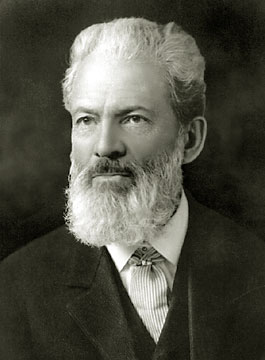 Marcellus Seth Ayer, founder and benefactor of the First Spiritual Temple, was born in Embden, Maine, on October 8, 1839. His parents were Seth Ayer and Mary Nutting Ayer. He came from a long line of New Englanders; originally from the Haverhill, Massachusetts area and, later, from the Embden, Maine area, known as Ayer Hill. He was one of six sons: Seth; Joseph; Marcellus Seth; George Augustus; Josiah; and Eugene.
At some point during the latter 1860’s, Marcellus Ayer moved to Boston, Massachusetts, where he became a teacher for the Boston school system. His love for young people and their future was evident during those years.
It was during the 1870’s that Marcellus Ayer made a dramatic change in his life’s work. Although his interest in education and religious thought was still strong, he knew that he had other things to do, at least for the time being. Deep within his Spirit, he knew that God had placed him on the earth to fulfill some type of religious and spiritual mission. His faith in God and Spirit assured him that, when the time was right, he would be given a clear sign; until then, he pursued other interests. His belief that religion, science, and education should work together for the advancement of humanity played a major role in his future achievements.
Although Mr. Ayer knew that man is not fed by bread alone, bread on the table was important to him. He had a keen interest in the grocery trade and worked in various sectors of the business until he could start his own company.
He started small, with his office on State Street, Boston, which, at that time, bordered Boston Harbor. He received goods from the clipper ships and dispersed them to the various retail grocers in the city. Throughout his career and its many incarnations, Marcellus Ayer had a simple motto:
Do well thy work, for it shall succeed, in thine or in another’s time.
He also believed in the basic concept of prosperity: if you send out positive thought, with the good of the whole in mind, good things will come to you. He extended prosperity one step further; he firmly believed that, if called upon to give what you have received for a greater cause, you should be willing to do so. He lived his life under this basic concept. And it worked.
Marcellus Ayer’s business, known as M.S. Ayer and Company, became a huge financial success. He purchased 189-191 State Street and 86-88 Central Street and became one of Boston’s most prestigious and respected wholesale grocers. In his trade, he was fair, honest, and hard working. People knew and loved him as a kind and generous man.
Business continued to grow, and Marcellus Ayer waited for the sign that he knew would eventually come. In the meantime, his religious and spiritual interests continued to broaden and eventully embraced Spiritualism. His interest in Spiritualism continued to expand, but he was deeply saddened at what the Spiritualists of the day were doing with the “pearl of great price” placed in their midst.
He loved God and Christ, and he loved the concept of Spirit and spiritual communication. But, he knew that it was all just a doorway: a doorway into life’s most amazing mysteries and revelations. He knew that what was being revealed through Spirit communication could be an answer to people’s most perplexing questions. To him, Spiritualism was a gift to Humanity; not to be embraced by any one group, nor to be limited to simple phenomena and demonstration. It was a gift given to all people, of all faiths and denominations. To Marcellus Ayer, Spiritualism — in its ancient essence — represented the missing link to Christ’s resurrection and ascension.
However, what Marcellus Ayer saw as the potential for Spiritualism fell far short from what Spiritualism was becoming. This deeply concerned and saddened our founder.
Finally, in the early 1880’s, while sitting in a circle for Spirit communication and philosophy at his home in West Chester Park, Boston, the sign that he knew would someday be given was given. And what a sign it was! Several of his family members and others in Spirit physically materialized to him and, via direct voice, instructed him that now was the time for him to give back to God and Spirit what God had so generously given to him.
He was instructed that now was the time for him to begin a religious society and church from which the noble truths of a New Dispensation in Spiritualism could emerge. Furthermore, he was told that such inspiration was being given to others throughout the planet; primarily in Germany, Russia, and South America.
The messages and inspiration from Spirit kept coming and the basic concepts of the church were established, as were the details for its church building.
It was to be a place:
- From which the voice of God and Spirit could speak to all people, from all religious and spiritual backgrounds.
- In which the life and teachings of the Master Jesus, the incarnation of the Great Christ Consciousness, could be embraced as an example for people of all faiths.
- From which both the religious and scientific implications of Spirit phenomena and communication could be examined, free from dogma and prejudice.
- Of healing and succor for the soul.
- In which the medium would never surpass the message.
Plans continued to be made. Then, on June 28, 1883, under the laws of the Commonwealth of Massachusetts, USA, our church was founded as:
The Working Union of Progressive Spiritualists
The Church became an immediate success, with a membership of over 1,000 people; but, trouble was brewing on the horizon. The very people who could have gained the most from this church society wanted to see it fail. Spiritualists of the day were outraged that Marcellus Ayer’s church was open-ended and based upon Christ-oriented principles and ethics. They did not appreciate that worship services were devoted to God and the Holy Spirit, rather than to communications with the spirits. Theosophists condemned any form of Spirit communication as astral deception. And, of course, Boston’s Victorian religious community was not at all hospitable to what Marcellus Ayer was doing. Marcellus Ayer knew he had to distinguish his church from traditional Modern Spiritualism.
Thus, in 1885, the name of the church was changed to:
The Spiritual Fraternity
This, Marcellus Ayer hoped, would suggest a place from which all people could come, worship, and learn in the true Spirit of Fraternity.
In the meantime, other plans were being made. A house of worship was being created. Plans for this grand edifice were given to Marcellus Ayer by Spirit. He presented the plans to local architects and, on April 9, 1884, the cornerstone for the building to be known as
The First Spiritual Temple
was laid at the corner of Exeter and Newbury Streets, in the Back Bay section of Boston, Massachusetts. It was a beautiful ceremony, with many people in attendance.
While the Temple was being constructed, worship services were held at Berkeley Hall, just three blocks away.
And then, it all came about, with a wondrous three-day dedication and celebration. Marcellus Ayer’s dream came true. The edifice known as the First Spiritual Temple was dedicated and consecrated on September 26th, 27th, and 28th, 1885.
Over 1,200 people filled the sanctuary and walked through the Temple’s library, lecture hall, and multitude of classrooms.
Marcellus Ayer gave it all back to God and Spirit. The whole expense of constructing the Temple was assumed by him alone. It was a monumental financial task, but he believed in giving back to God, and he did so gladly, with no personal fanfare. His name appears nowhere in the original Boston Temple as the sole benefactor of such a glorious edifice.
Marcellus Ayer was humanitarian in nature. He believed deeply in the Fatherhood/Motherhood of God and the brotherhood/sisterhood of Humanity. Committed to human rights, he was an avid proponent of the Suffrage Movement and human rights in general. He also devoted his energies to expounding health and hygiene. In fact, he was the first to develop a decaffeinated coffee substitute in Boston. In addition, he was very involved in pioneer psychical research and worked closely with the renowned Andrew Jackson Davis in fostering such work.
The church’s work continued to grow, up until around 1910. But, prejudice and resentment ultimately took their toll on the church. In 1914, the main sanctuary of the Temple was reconstructed and converted into Boston’s legendary Exeter Street Theatre. Our records indicate that Marcellus Ayer initially opposed this move, but finally agreed, hoping that someday the theatre would be removed and the church would return to her former glory. Worship services were then conducted in the lower church auditorium.
There is so much more to the history of our church and its founder, Marcellus Ayer. The church’s history from 1914 to 1975 is known to but a handful of people. We are slowly compiling a biographical portrayal of that amazing period.
What we can say is that, in 1975, the original building was sold and the church relocated to the Longwood area of Brookline. On September 30, 2013, the Brookline property was sold. We now have our church in West Harwich, Massachusetts.
In 1977, shortly after the death of church Trustee and President, A. Viola Berlin, Rev. Simeon Stefanidakis and Rev. Stephen Fulton were ordained to assume the ministerial wheel of the church. Times had changed, and the church needed to step up to those times. First of all, the name of the church had to change. Spiritual Fraternity, although appropriate for its day, suggested too strongly a male-oriented society.
Since that time, the name of the church has reflected the name of its building and house of worship. We are now known simply as the
First Spiritual Temple
On June 16, 2017, Rev. Stephen Fulton passed to Spirit. The mission and ministry of the church are now under the direction of Rev. Simeon. Marcellus Ayer passed away, in his home, at 190 Commonwealth Avenue, Boston, on January 30, 1921. Many of his dreams were realized; many were not. But, despite the good and the bad times, he always lived by his motto, one which should speak to us all, today:
Do well thy work, for it shall succeed, in thine or in another’s time.
First Spiritual Temple
Kingston, NY 12401
Email us [email protected]
Making Sense of God, Spirit, the Prophets and Religion Through 4000 Years of Spiritualism.


Please consider making a tax-deductible donation to our Temple. You may also donate via check, payable to "FIRST SPIRITUAL TEMPLE TRUST" and mailed to: 104 Van Gaasbeck St., Kingston, NY 12401. Thank you.